

First look at the Original Prusa XL: CoreXY with a consistently perfect first layer and many new features!
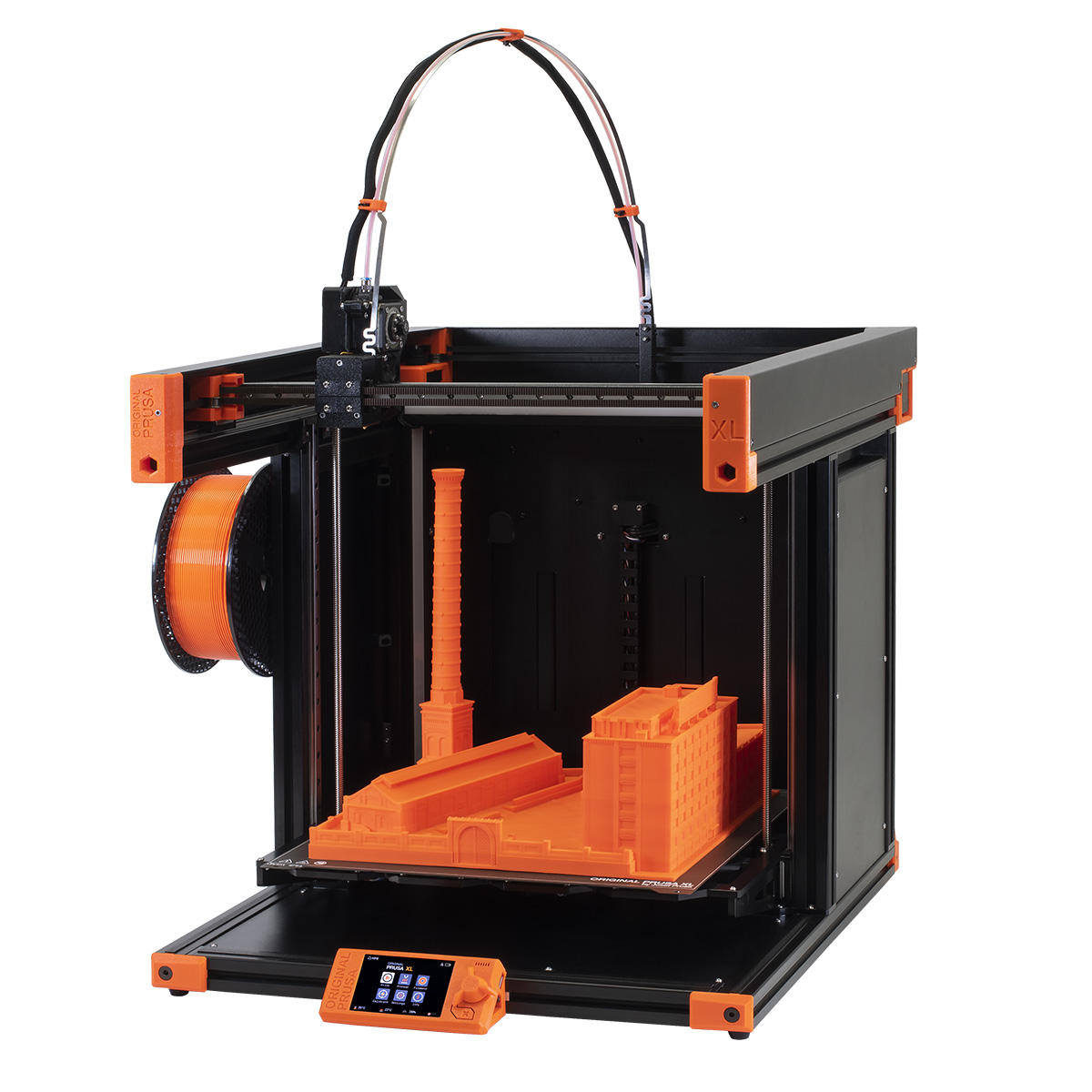
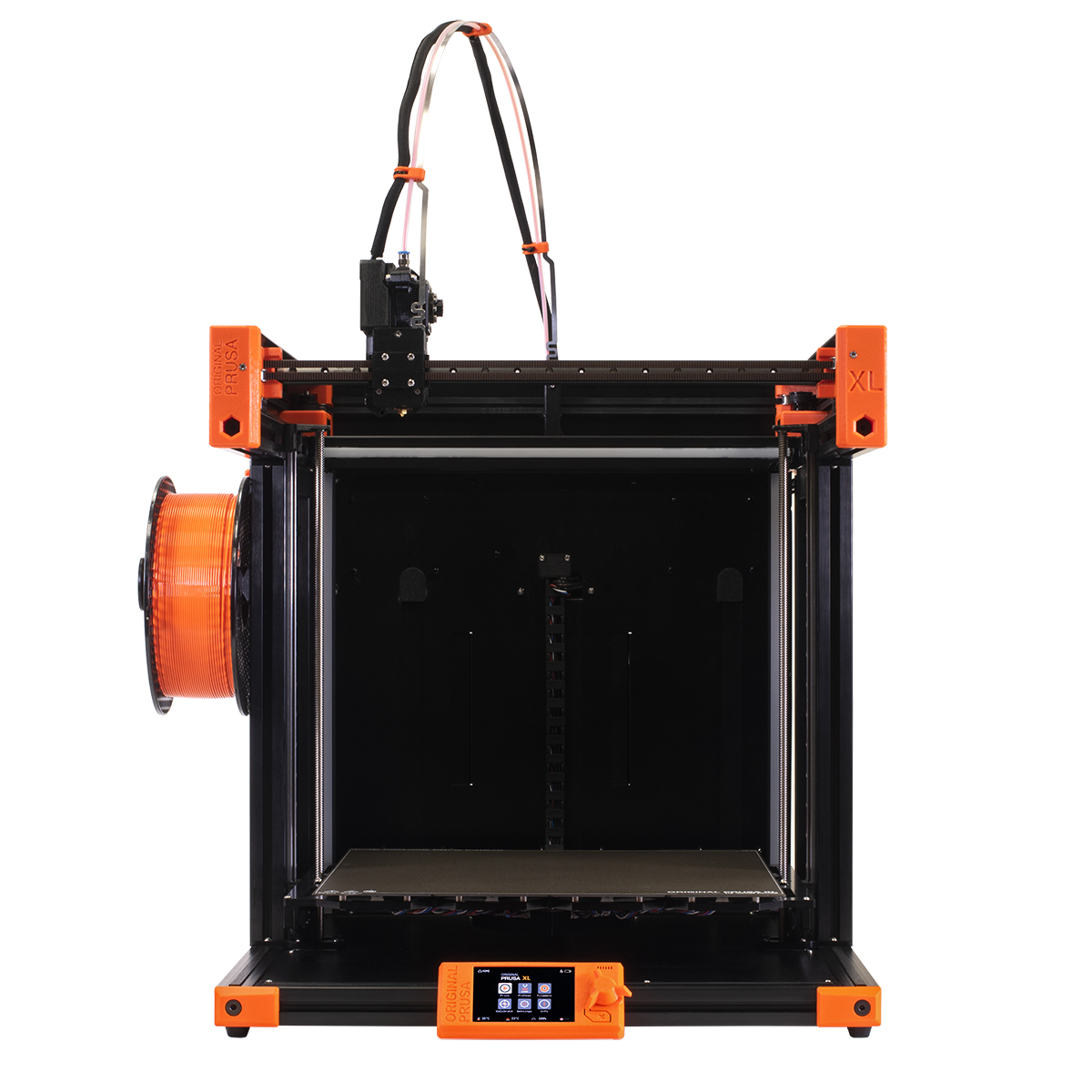
Hello everyone, here is the Big news that many of you have been waiting for (some might say Friday came a little too early) 😉 I'm happy to tell you first look at the original Prusa XL, our upcoming big CoreXY 3D printer with a 36×36×36 cm build volume (14.17" in the cube) Building volume, to give you a next-generation extruder, new hotend, segmented bed and a tool changer!
There are some crazy features that are included in the XL have been packed (such as a consistently perfect first layer!) and I can't wait to show the details, because the new printer has much more than just a large building volume. Almost every aspect of the machine was developed from scratch, and it's truly a beast! Delivery is currently planned for Q2/Q3 2022, but we are offering [service/option] immediately. Pre-orders to. This time, however, they work differently, as you have to make a refundable deposit instead of paying the full price upfront – see below for more information.
Basically, the XL is something completely different than just a scaled-up MK3S+. You could even think of it as a kind of showcase model for our future 3D printers. 😉 So let's get started right away!
Building a Prusa CoreXY
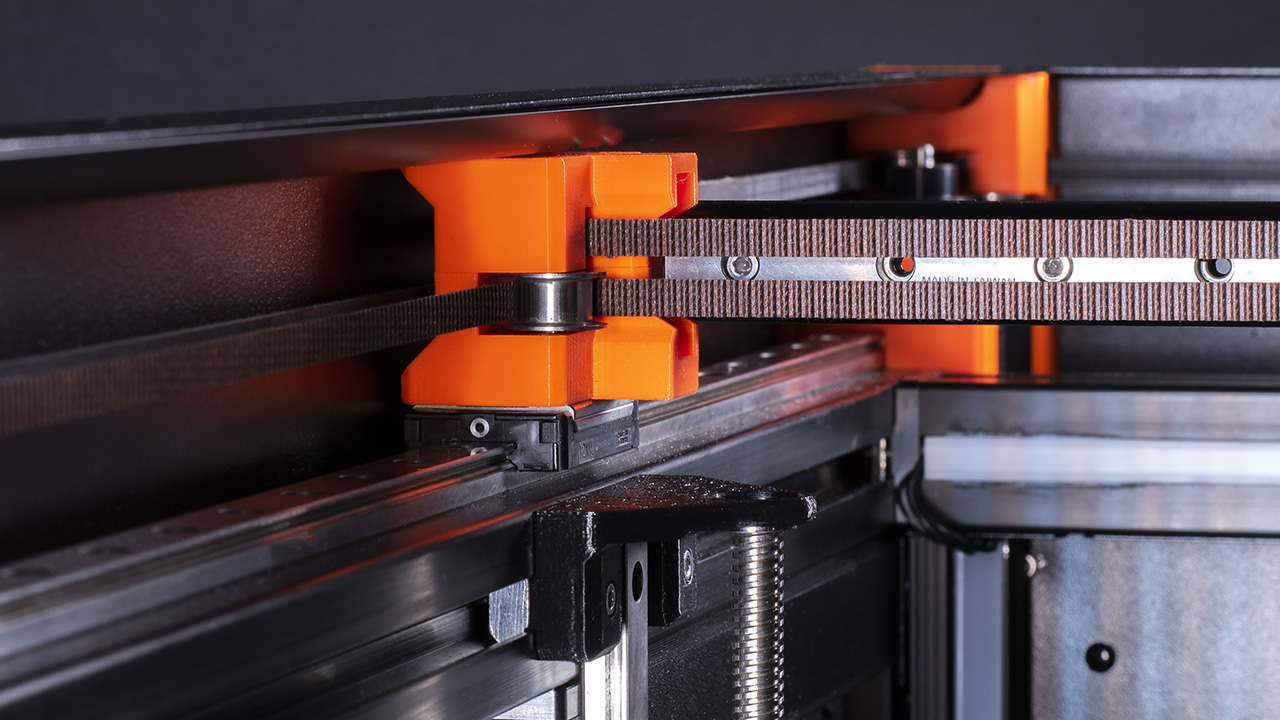
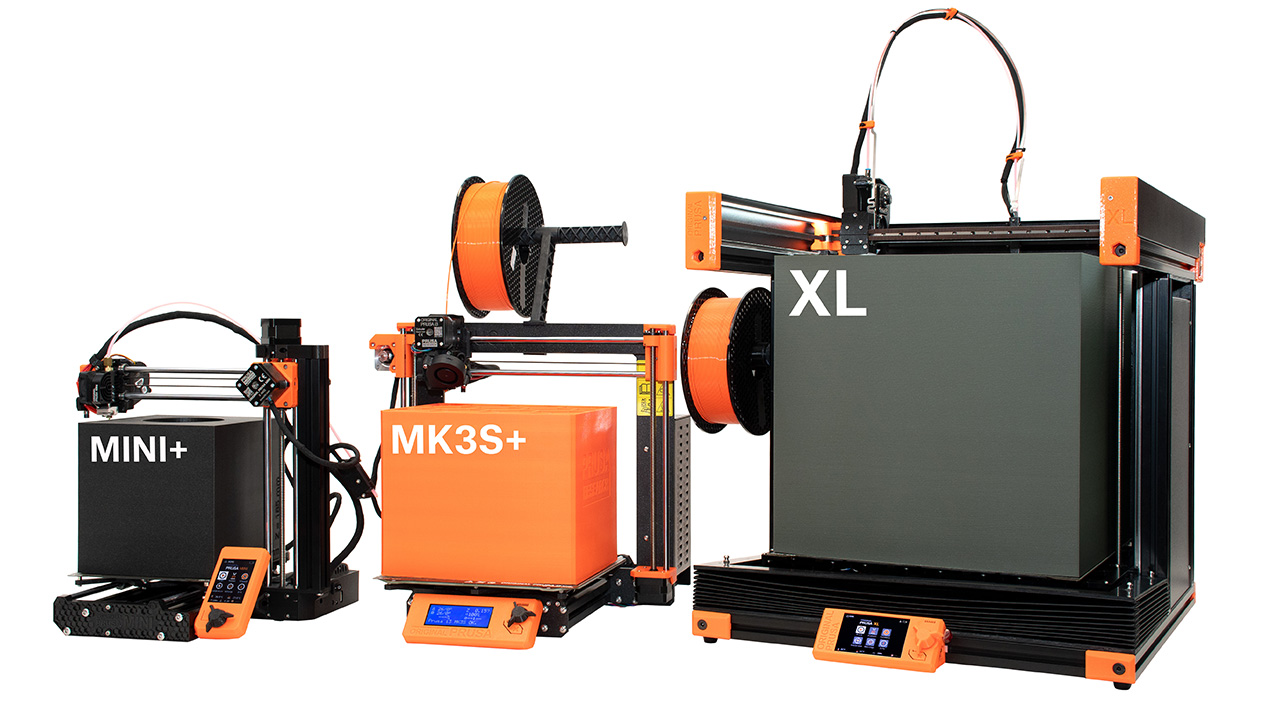
There were a number of variables we had to consider when developing our first CoreXY printer. The first of these was, of course, the correct size. We opted for 36 cm (14.17") in the cube. – for a number of reasons. The larger a printer is, the more susceptible it is to vibrations and other unwanted effects, which result in poor-looking prints. Construction of a larger MK3 It would therefore have no real advantages. In fact, quite the opposite. Using the same design would bring with it a number of problems – a large, heavy heated bed that moves along the Y-axis, less stability at higher Z-axis values, and so on. CoreXY was the right way to go.
 |
|
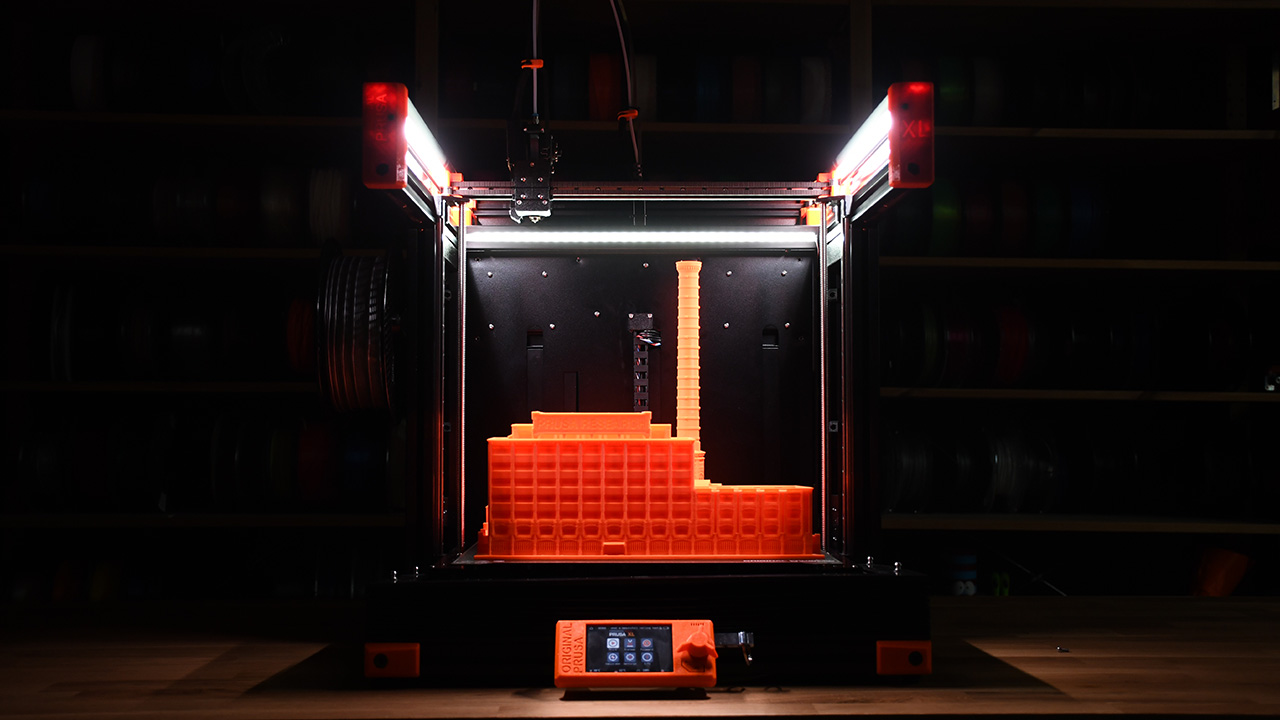
A 36 cm cube is more than enough for most large objects – for example, you can easily print a cosplay helmet in one piece or create detailed architectural models. There is another important aspect to consider when working with large objects: The greater the pressure, the longer it takes to finish. We are still fine-tuning the firmware and print settings to be able to tell you the maximum speed, but you can be sure that the XL will perform well thanks to its small and lightweight direct-drive extruder. can be very fast. Just one note in advance: We are aiming for print quality, not to participate in the SpeedBoatRace.
However, we are considering an unsupported but official one. Klipper firmware For those who want to push the limits. Either way, no matter how fast the XL ends up being, large prints (several kilograms) will still take days. Rest assured, we all the proven functions of our current 3D printers implement measures to reduce the strain of long printing processes – such as power panic and filament sensors .
Furthermore, there is various practical additions Like the extendable filament spool holders on the side of the printer, which can accommodate spools weighing up to 2-3 kg – these are needed because the XL can devour a standard filament spool in no time. It will also optional accessories (Windscreen/housing) will be available, which will be revealed later.
New segmented heated bed
With the defined dimensions, we were also able to complete the development of another innovative feature: our new segmented heated bed. Why not simply use a scaled-down version of our standard "MK52" bed? Every time I see a large 3D printer printing something small, I'm reminded of how wasteful it is to heat up the entire huge heated bed and consume kilowatts of energy every time you want to print something. Our new heated bed with individually controlled 9×9 cm segments It is not only energy-efficient (you can switch individual pads on and off), but also reduces [something] thanks to the expansion joints between the individual segments. This effectively prevents warping . To explain: Standard heated beds tend to warp as the temperature rises. This problem isn't very pronounced with smaller surfaces and can be partially compensated for by leveling the bed. However, the problems become more noticeable with larger heated beds.
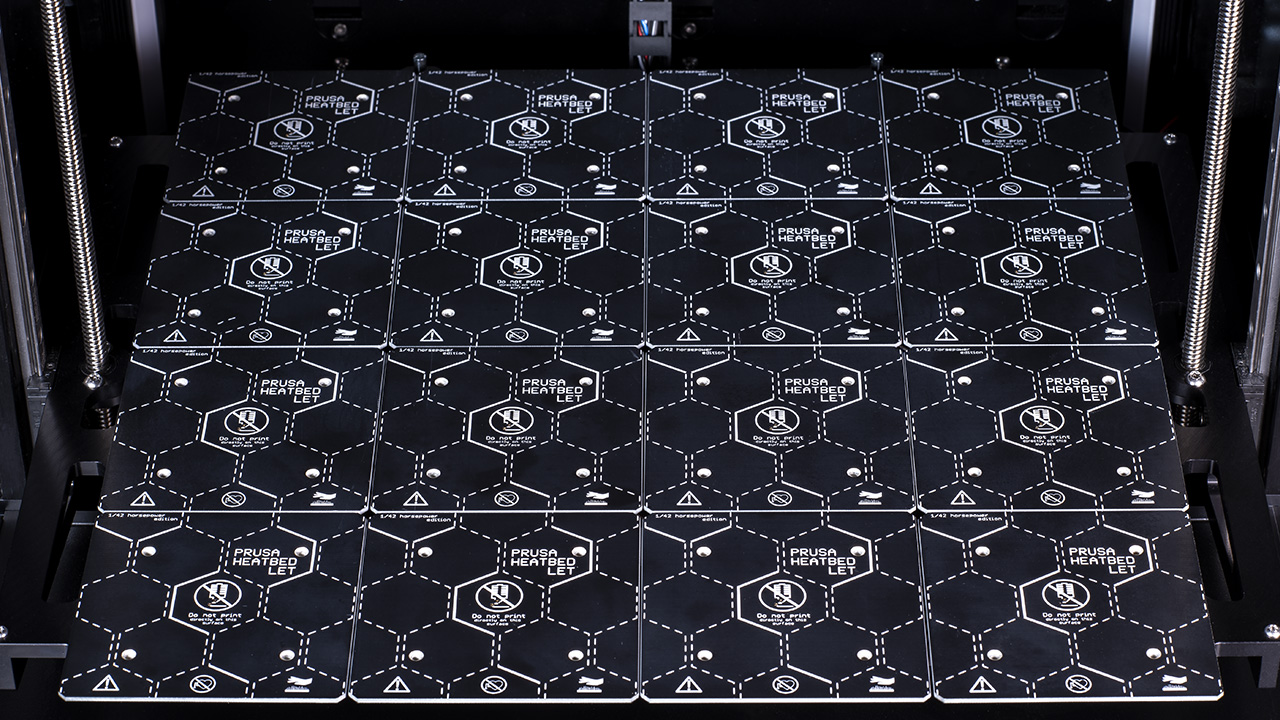
With the segmented heated bed, we can do all sorts of things – such as… Heat individual segments in a checkerboard pattern. (via PWM), which reduces the load on the power supply. One of the obvious advantages is the ability to heat only some of the 16 heated bed segments if the printed object is small enough.
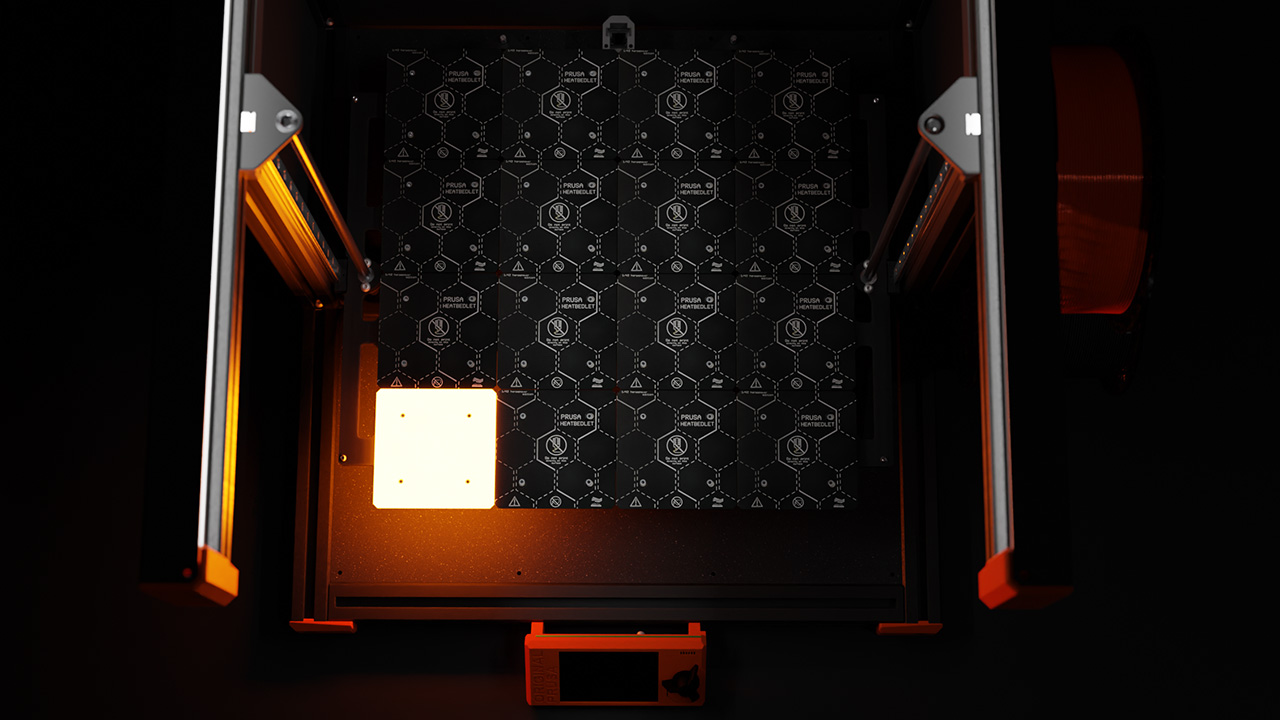
Of course, the segmented heated bed wasn't only developed for the XL. These 9x9 cm segments allow... We can enlarge or reduce the size of our machines as needed. Did someone say Prusa XXXL? 🙂 I don't think anyone has noticed yet, but also... The printers we are showcasing at EXPO 2020 Dubai use these pads – only in a 3×3 pattern.
But I think it's time to to come to another star of the show!
The Nextrudder and the always perfect first shift
The XL is equipped with our It's equipped with a new next-generation extruder, or "Nextruder" for short . We spent almost three years developing it, and frankly, there are so many new features that it's difficult to pick the best one to start with.
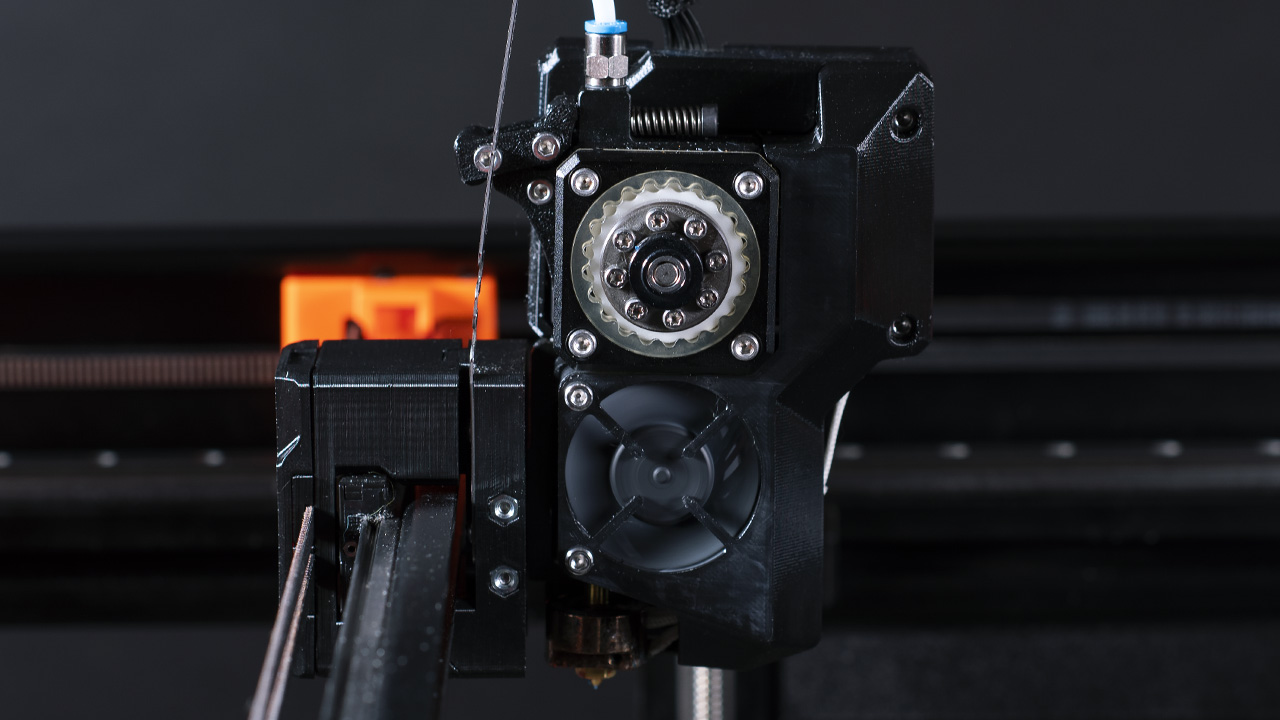
So let's start with something that becomes visible every time you start a new print: We use a high-precision load cell sensor to to deliver a consistently perfect first layer. Instead of an off-the-shelf load cell, we developed our own system. It is embedded in the massive one-piece heat sink and allows us to measure the physical stress on the heat sink. This enables us to Use the nozzle as a sensor to "probe" the print surface . We use analog measurements that give us precise information deliver components we can work with. Incidentally, years ago I had a force sensor in my i2, positioned between the extruder and the hotend, to measure the force required for extrusion. Those were the days… 🙂
For the layman, this means: We can use the load cell system to... incredibly precise height calculation to perform the first layer. Regardless of whether you have just replaced the nozzle or the print plate – you don't need to recalibrate anything. There is no need to adjust Live Z, no manual calibrations, or any kind of complicated Nylock mods to achieve a perfect first layer. It works every single time. And it's a joy to watch. If I'm exaggerating a bit, you could theoretically put a wooden board in the printer and it would still produce a perfect first layer. But don't do it! 🙂 Anyway, that means you'll soon to be able to say goodbye to the fiddling with the first layer and Live Adjust Z!
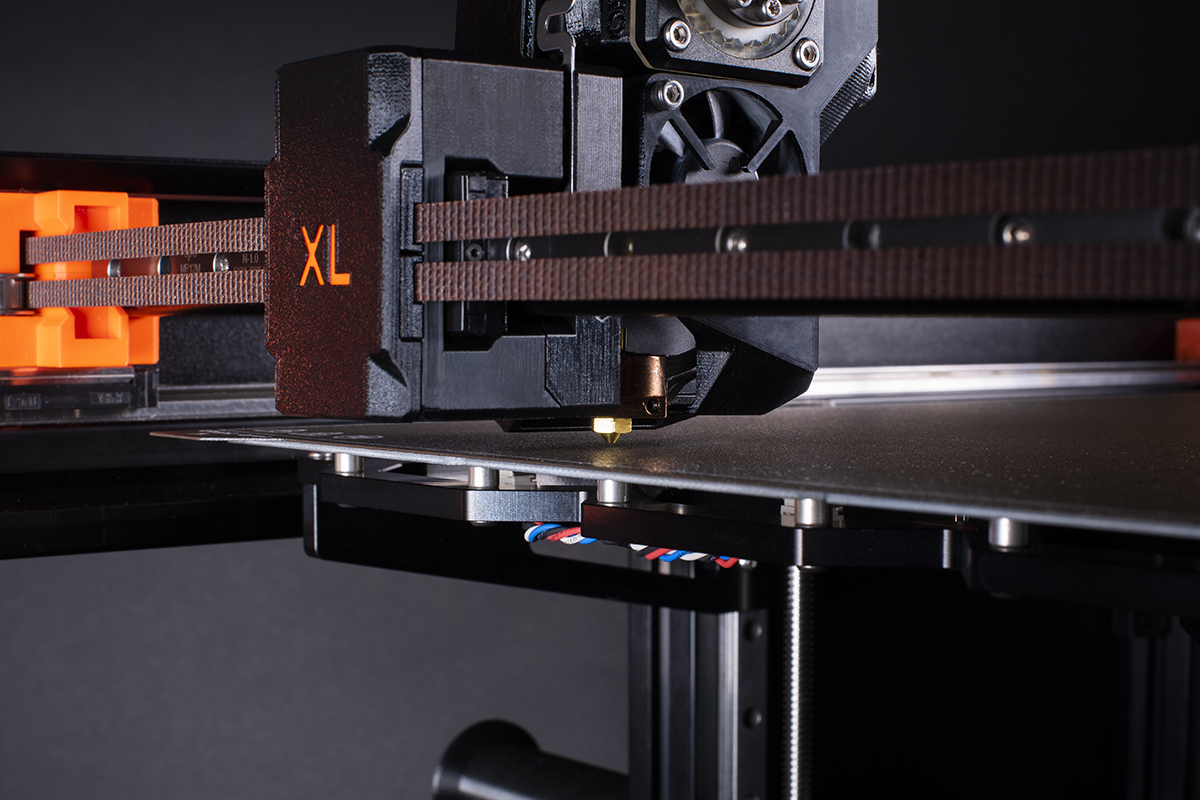
However, we can do even more with the power cell sensor. We can now detect a blockage in the nozzle. and interrupt the pressure. In the future, we want to focus, among other things, on the ability to a partial traffic jam to detect this – so that the printer can notify you in time before an actual jam occurs. And perhaps even detect if the print has detached from the bed.

Engage the transmission!
To further improve print quality, the extruder now features a brand new, internally developed Backlash-free cycloidal gear with a large, slip-free drive gear . This system replaces the previous solution with two small grooved gears and enables a greater control over how the filament is fed into the nozzle . We even have a Overkill solution It features a built-in 20:1 gear ratio. This far exceeds the performance we see in most other extrusion systems on the market and delivers extremely high thrust. And it works remarkably well.
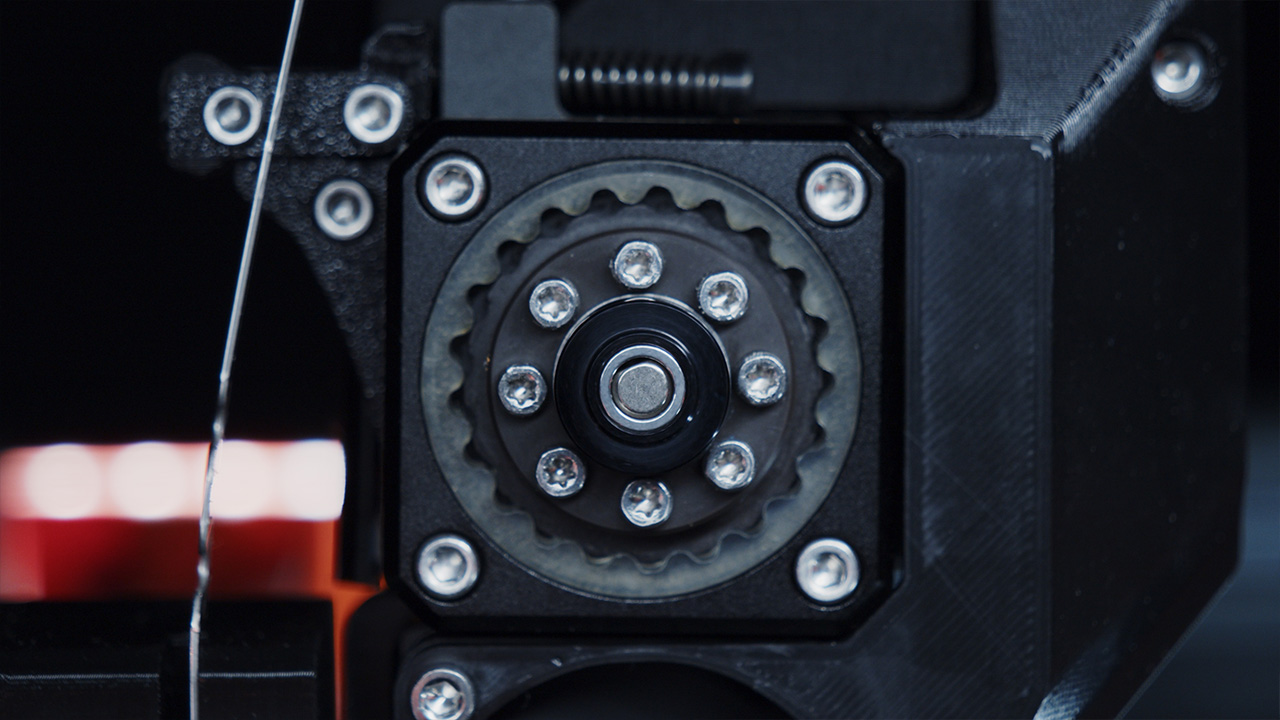
The Nextrudder also features a brand new electronics breakout board with a dedicated CPU and a stepper driver, so that basically Everything in the extruder is directly connected to this board , which is then connected via a Single-cable interface It is connected via an easily replaceable connector on the edge of the new custom 32-bit motherboard. We have also integrated an additional thermistor into the heatbreak. This allows us to adjust the temperature according to the material specifications and also Detecting heat creep .
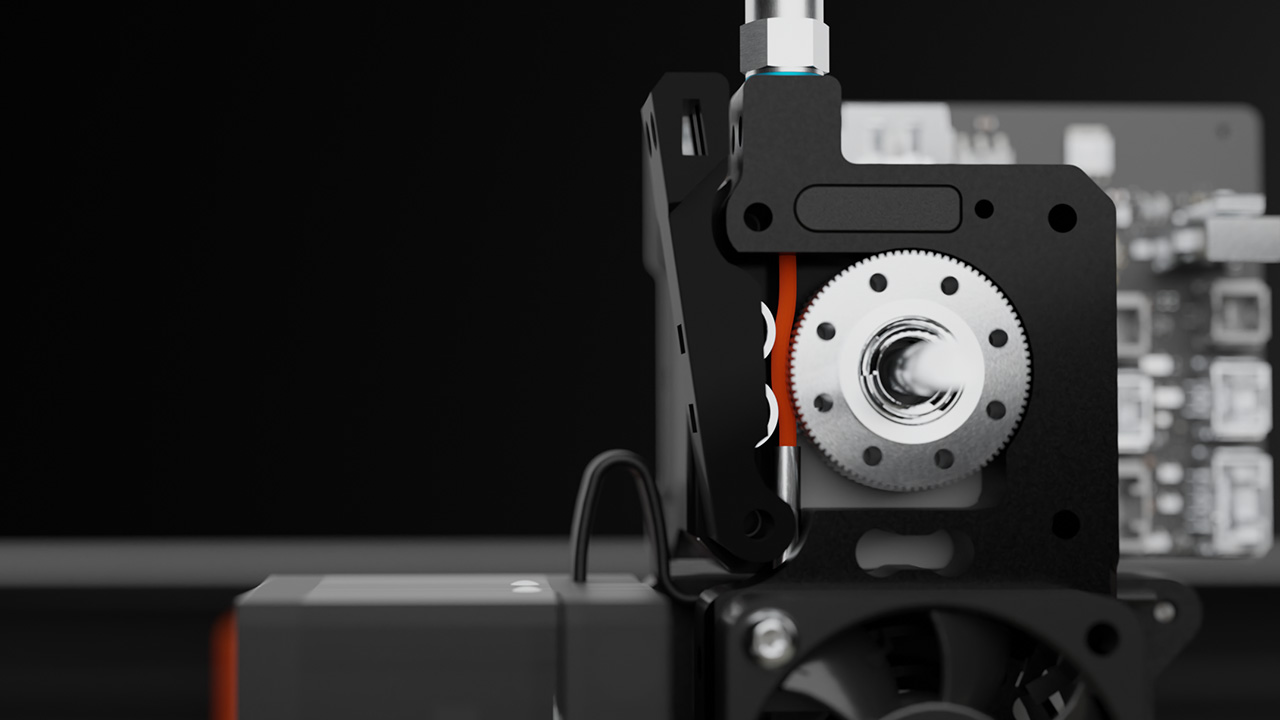
The nozzle, developed in collaboration with E3D, is in a completely new assembly Embedded within the extruder, the entire hotend (with all-metal parts) can be easily removed. The nozzle is connected to a metal tube, preventing various problems that can arise from insufficiently tightened nozzles. Easy nozzle replacement was crucial because we wanted to give you more options for printing with different sized nozzles—for example, a larger diameter for more durable objects and faster printing (which is very useful on a large 3D printer). To be clear: even if it seems familiar, this is different from the Revo system.
Although I could write much more about the Nextrudder here, I'd like to save some things for later 😉 Let's continue!
The right tools for the job
Since the XL is a CoreXY machine, we have repeatedly... Tool change functions thought. The result is that the machine with It can operate with up to five independent tool heads.
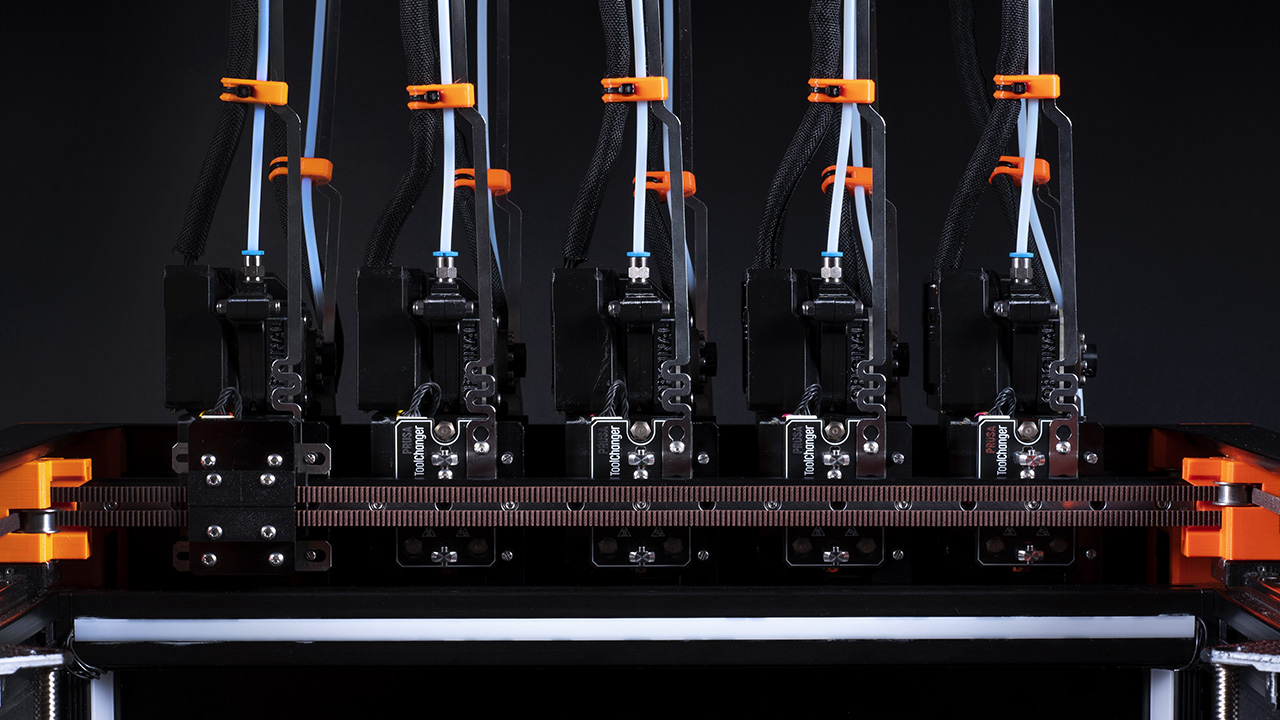
We have a kinematic coupling mechanism Developed that requires no electromagnets or other active elements to function. The system is extremely precise and has a Fully automatic calibration of the tool alignment ensures that everything is perfectly aligned after every tool change. The system is also based on the force cell sensor – No more tedious calibration prints, Everything is automated. The printheads simply tap a small calibration pin and configure the offsets automatically. Watch the video , because it shows everything in action!
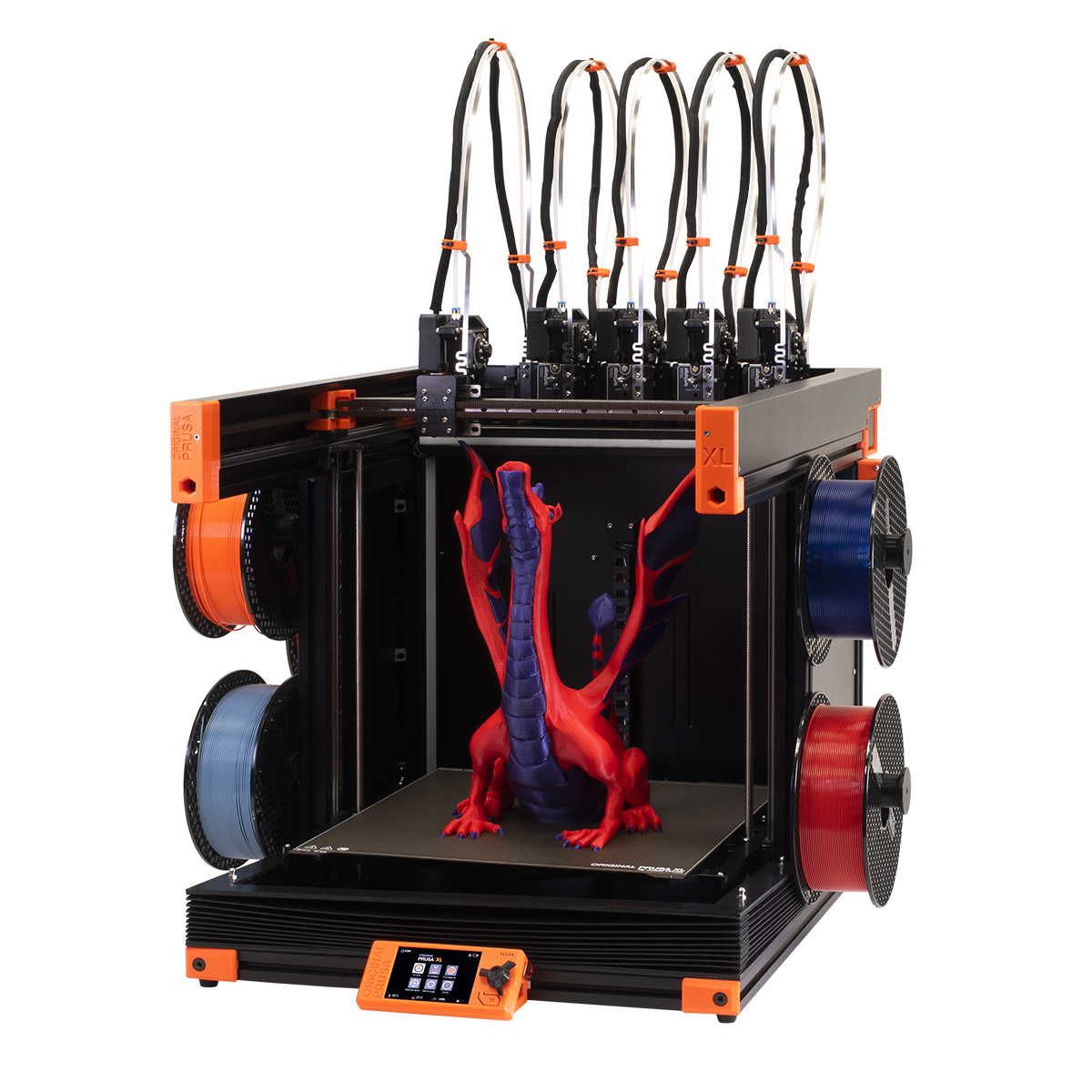
Furthermore, there are sensors that ensure the tool head has been successfully replaced. We have already conducted several months of internal tests on changing the tool heads, and we are at over half a million successful tool changes without a single breakdown.
Since the changer supports up to five tool heads, this means that you: Effortlessly print on soluble carriers , print with up to five colors or completely different materials use (because each nozzle can be preheated to a completely different temperature). We're even considering, Mixing different nozzle sizes in a single print job to reduce printing time. Of course, we're also considering other tools besides extruders.
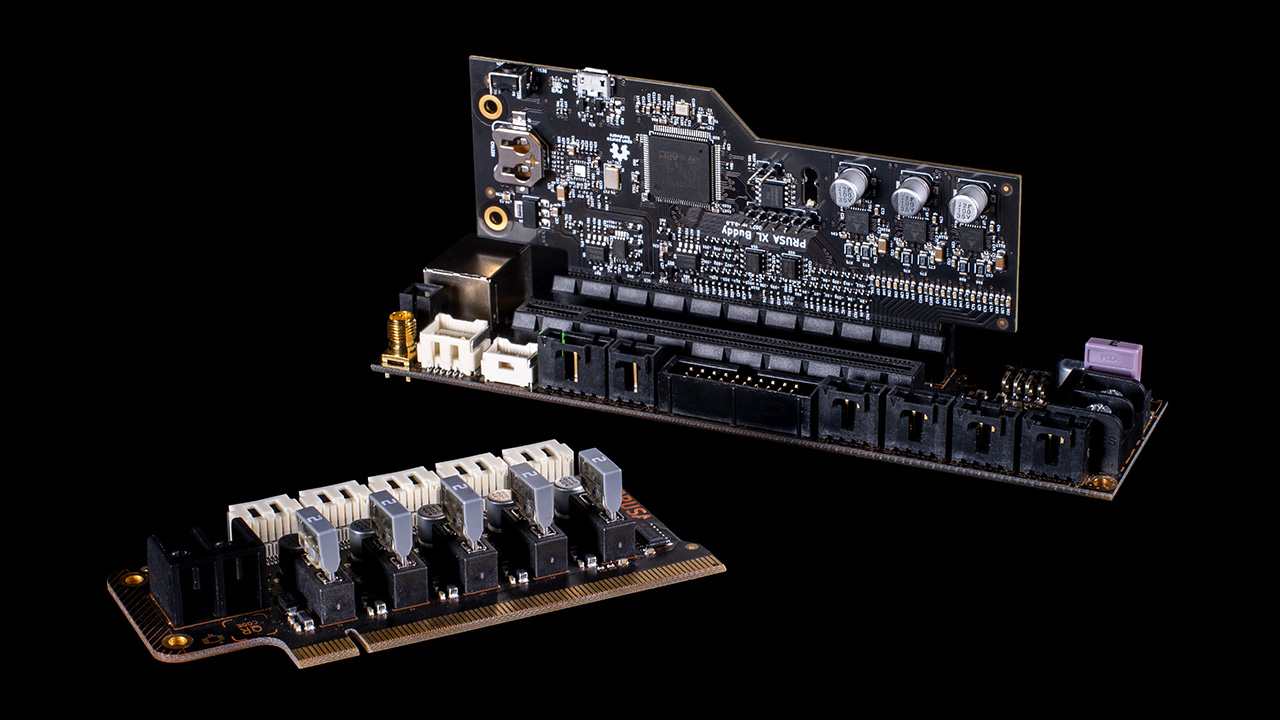
If you simply need a large-format printer, then the single-extruder version is right for you. However, everything is ready for an upgrade, so that you can use up to five tool heads. Once you have the optional tool change mechanism Once installed, you can easily switch between two tool heads change. For three to five tools, you need one Add an expansion card . This way you can gradually upgrade your XL and adapt it to your needs. In other words, if you buy a single XL tool, You can purchase the tool changer and the individual tool heads separately.
Coming in 2022
Announcing a new product in these challenging times is still quite difficult – I'm sure you're reading about it everywhere: a shortage of components, long delivery times, and other problems. We've already started working on it, though. to produce as many parts as possible in-house (We even bought SMD assembly lines!), but we need more time to get everything up and running. At the moment, we're still dependent on several third-party suppliers and Sourcing parts for development is no easy task. On the other hand, we simply couldn't keep you in the dark any longer and wanted to finally show you what we've been secretly crafting for so long.
Due to the ongoing uncertainty regarding components and delivery times, we have decided to to postpone the start of XL production to Q2/Q3 2022, so that we can secure enough components for the start of production. By default We will offer three versions of the XL in our online shop: Single head, double head, and the full five-head version. Please note that there is a price increase for 3+ tool heads due to the need for additional hardware. Based on the current situation We are aiming for the following prices:
- A single tool head, partially assembled – $1999 (excl. VAT) / €2099 (incl. VAT)
- Two tool heads pre-assembled – $2499 (excl. VAT) / €2599 (incl. VAT)
- Five tool heads, semi-assembled – $3499 (excl. VAT) / €3699 (incl. VAT)
The price for the fully assembled version of each variant will be $500 more. Should this change at any time, we will publish an update.
It is very important for us to know the demand now so that we can secure the additional components as quickly as possible. Therefore We now offer pre-orders in our new e-shop to. But this time we're doing it differently. Instead of paying the full price immediately, There is only a refundable deposit of 200 USD. This way you can secure your place in the queue (which we expect will be quite long again...). As soon as your printer is close to being shipped, we will contact you and You can fully process your order. – Change the printer configuration (e.g., select the number of print heads), add accessories and filaments. The reservation fee will, of course, be deducted from the total order price. This also allows us to better adapt our production to demand.
So, that's it for now. The last announcement this year. We'll be back later to reveal more details about the XL. In the meantime, you can check out the shop page in our new e-shop, and if you're on the Formnext trade fair in Frankfurt If you are interested, you can see the XL in action at our stand number A127!
Have fun printing!