

The Prusa Pro HT90 is here: The only 3D printer an engineer needs + Introduction of Prusament PEI
We unveiled our new state-of-the-art industrial 3D printer, the Prusa Pro HT90, at FormNext 2023, where it made waves thanks to its support for high-end materials and various innovations for improving print quality. Today, I'm pleased to announce that the HT90 is fully available and already on its way to its first customers. And I can finally give you a more detailed look. 
In short: The HT90 is our new faster, extremely versatile industrial 3D printer with a cylindrical pressure area with a diameter of 300 mm and a Z-height of 400 mm. It features a actively heated chamber (up to 90 °C), a Input Shaper for ultra-fast printing and replaceable printheads (up to 500 °C). And above all, the HT90 supports a wide range of materials, from PLA to PEI (Ultem), One of the most sophisticated filaments certified for aerospace applications. All this is made possible thanks to the unique cooling solution we developed in-house.
Let me give you a full overview and explain why I am convinced that the HT90 is the only 3D printer an engineer needs.
Total performance
Let me start with a more general statement. It is very difficult to develop a 3D printer that can do "everything" and do everything really well at the same time.
An actively heated chamber is important for demanding filaments, but materials like PLA perform very poorly when printed at higher temperatures. Conventional enclosed printers often compromise on material performance. Materials like PLA don't even work well in passively heated enclosures, so the front door often needs to be opened for optimal print quality.
That's not the case with the HT90. Its specific cooling loop The temperature of the enclosed chamber is optimized based on the material used. Air is constantly passed through a HEPA filter, so you can place the printer on your desk and all ultrafine particles will be captured by the filter system.

But that's not all. There's another cooling system specifically designed for the high-flow printhead. I'll get to that in a second.
So you have this comprehensive all-in-one package that offers all possibilities to follow the usual development process: Start with a quick PLA prototype and go all the way to the final product made from a high-end polymer, without having to switch to another printer or wait for a supplier to deliver the finished product.
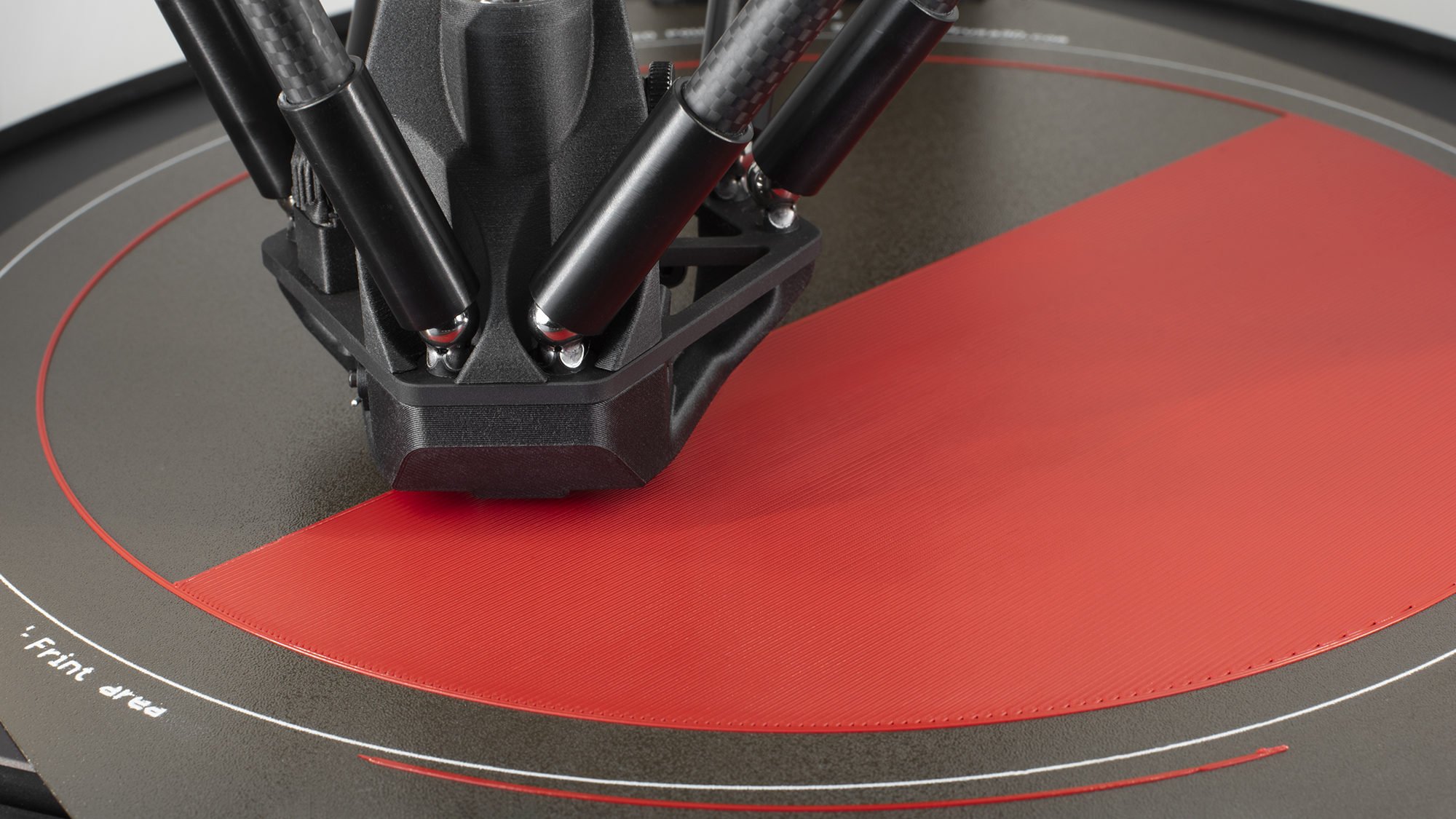
Because the printer uses delta kinematics, we were able to place all critical components, such as the 48V motors, outside the heated chamber in a cooler area, significantly extending their lifespan—something not easily achievable with other printers. Another advantage of the delta design is that we can use lightweight aluminum printheads, enabling higher printing speeds and helping to eliminate printing artifacts common in Cartesian and CoreXY 3D printers.

From aerospace to medicine
The advanced cooling system allows the HT90 to Printing on materials such as ASA, ABS and PC. Its heated chamber and 300°C high-flow printhead ensure incredible performance. The chamber heats up to 90°C, creating perfect conditions for materials that are otherwise prone to warping or delamination. It offers incomparably better performance than passively heated enclosures. This allows you to Quickly print massive objects from ASA and ABS with perfect overhangs, high speed and best print quality across the entire print area.
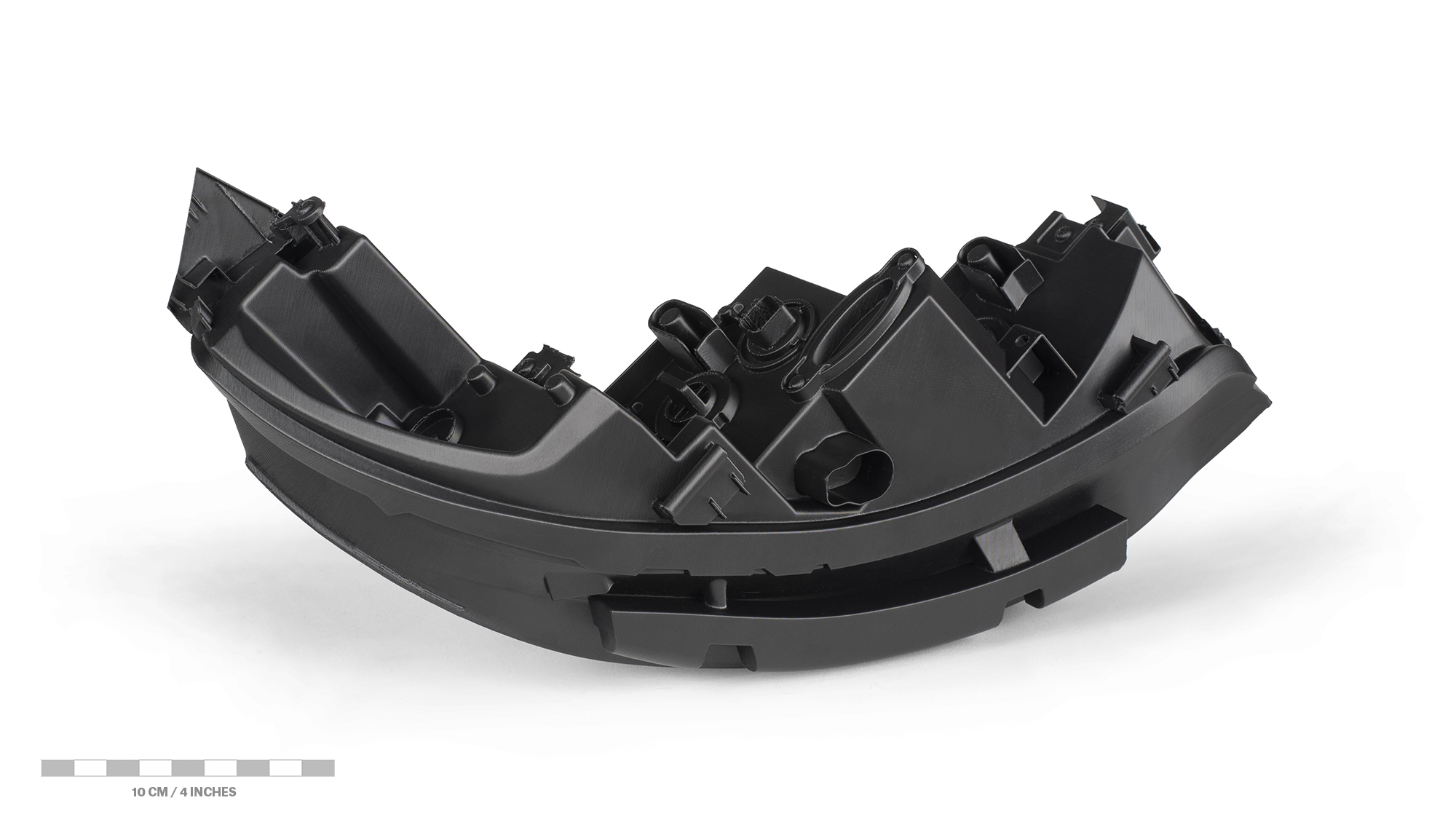
Large ASA 3D print
However, what makes the HT90 truly special is its ability to process even the most demanding filaments on the market with its 500°C high-temp printhead. PPS, PPSU, PES, PEKK, PEEK and of course PEI (Ultem) They can be used for small to medium-sized objects. The HT90 is the most affordable and cost-effective solution for printing these materials. This is possible thanks to the advanced heating system inside the chamber. Instead of using a single heating element with a fan, the two rear walls of the HT90 provide the heat and pump it into the chamber, resulting in rapid and even distribution. This is particularly useful for tall objects that might otherwise end up in two areas with different temperatures.
With the HT90 you get a truly universal solution that allows you ultrafast PLA prototypes, flexible TPU objects and large ASA/ABS prints It can produce parts with perfect layer adhesion. It processes even the most demanding, high-quality industrial filaments.
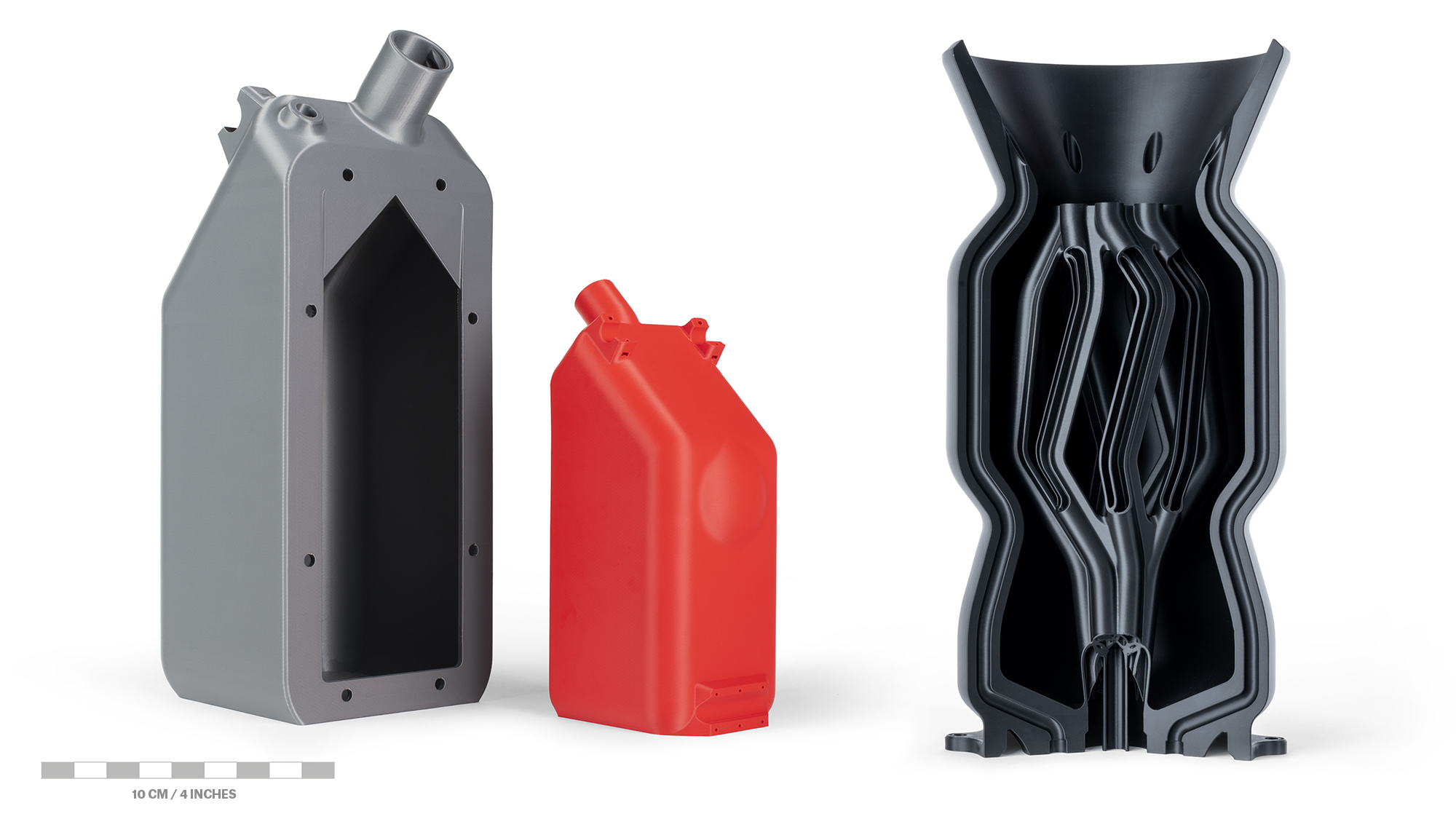
ABS and ASA 3D prints
Its compact footprint makes it the ideal choice for all work environments, from typical desks to specialized workshops, production facilities, and print farms. Furthermore, the front door slides upwards, saving even more desk space. Aerospace, automotive, and medical technology are just a few of the industries that can benefit from its comprehensive material support.
Two specialized printheads
The HT90 comes with two specialized, direct-drive printheads. They are quick and easy to swap thanks to their magnetic attachment. Simply detach the arms and disconnect the cable from the top of the printer, and you can start printing with a different extruder in minutes. Both are equipped with quick-change REVO nozzles, ensuring you can always find the best combination for your project.

The high-flow printhead reaches temperatures up to 300°C and is the best choice for materials ranging from PLA and PETG to PC. It features a special cooling system with an ultra-fast flap – air is drawn from the chamber by a high-pressure turbine and routed through a special hose to the fanless printhead to further reduce weight. Then the flap can change the airflow within milliseconds. This is incredibly important. Even the best fan can never switch on and off that quickly and will struggle to cope with the harsh temperatures in the chamber.
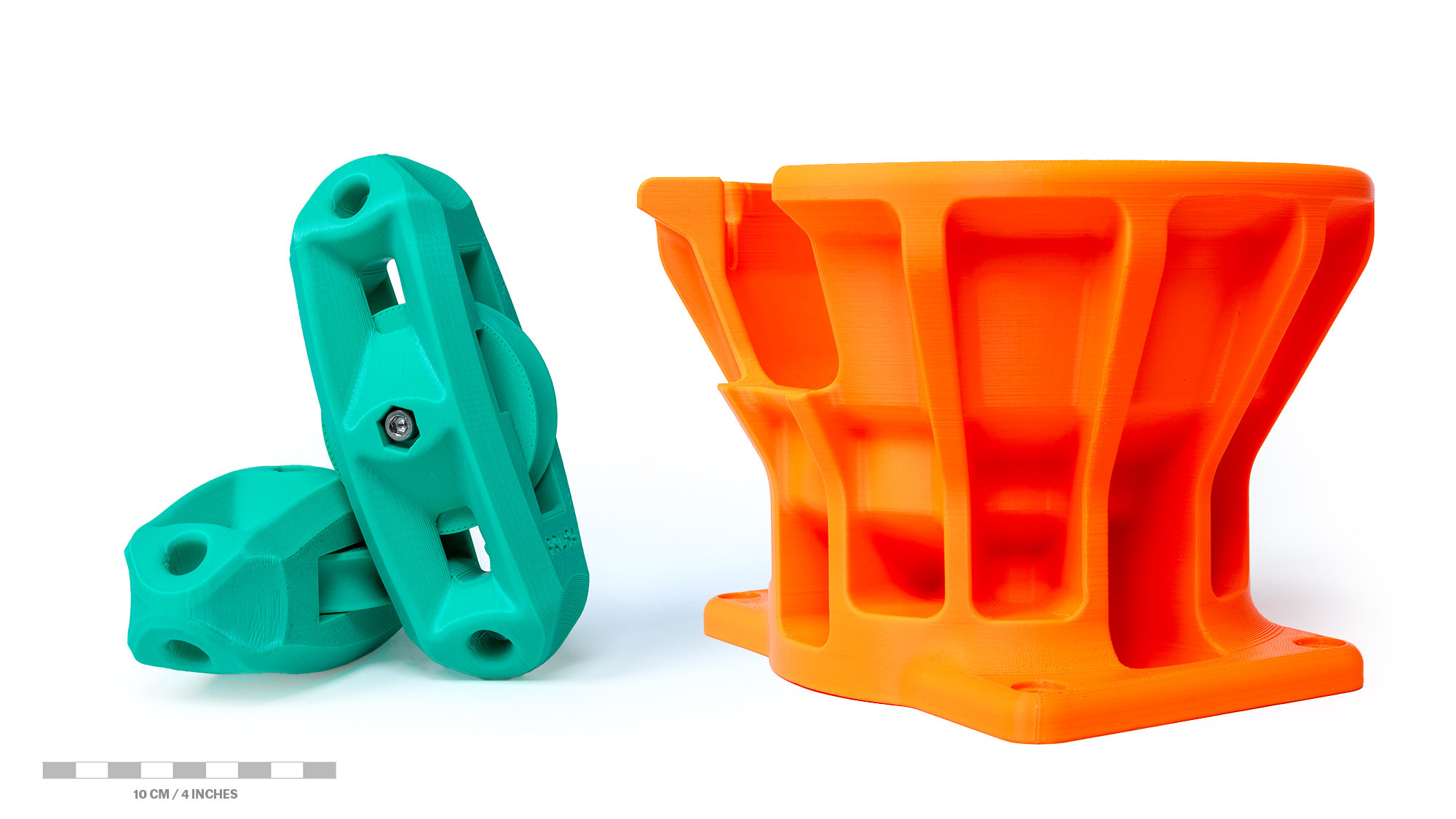
PCBlend (left) and ASA (right)
Our solution allows for instant adjustment of the print cooling, enabling the printer to direct cooling air with incredible precision, for example, when printing a steep overhang. This allows it to create overhangs without supports that almost defy gravity. As soon as the printhead moves away from the critical area, the system adjusts the cooling accordingly to achieve even better layer adhesion. This printhead comes standard with a high-flow REVO nozzle.
The high-temperature printhead reaches temperatures up to 500 °C and is equipped with an abrasion-resistant nozzle. It is designed for high-quality materials such as PEEK, PEKK, PEI, and more.

PEI (Ultem) 3D prints
What is Prusa Pro?
Prusa Pro is our dedicated industrial product line, designed and manufactured under its own brand alongside our Original Prusa printers. Prusa Pro industrial machines showcase our latest technologies: heated chamber, automated print collection, image recognition, high-pressure turbine cooling, 48V motors… Prusa Pro is where we can implement all of this. The advancements we make here shape the technology in our other products.
But the influence goes both ways. Our industrial machines benefit from the hundreds of thousands of Original Prusa 3D printers worldwide and the feedback from users. Our colleagues working on the Prusa Pro product line form a completely separate, independent team, comprised of new specialists hired specifically for this new branch, as well as experienced developers who joined us when we acquired FUTUR3D and TRILAB. Prusa Pro has its own development and manufacturing. We don't intend to change our focus with Original Prusa printers or make a sharp turn toward becoming a purely industrial company. However, expanding into industrial segments makes perfect sense.
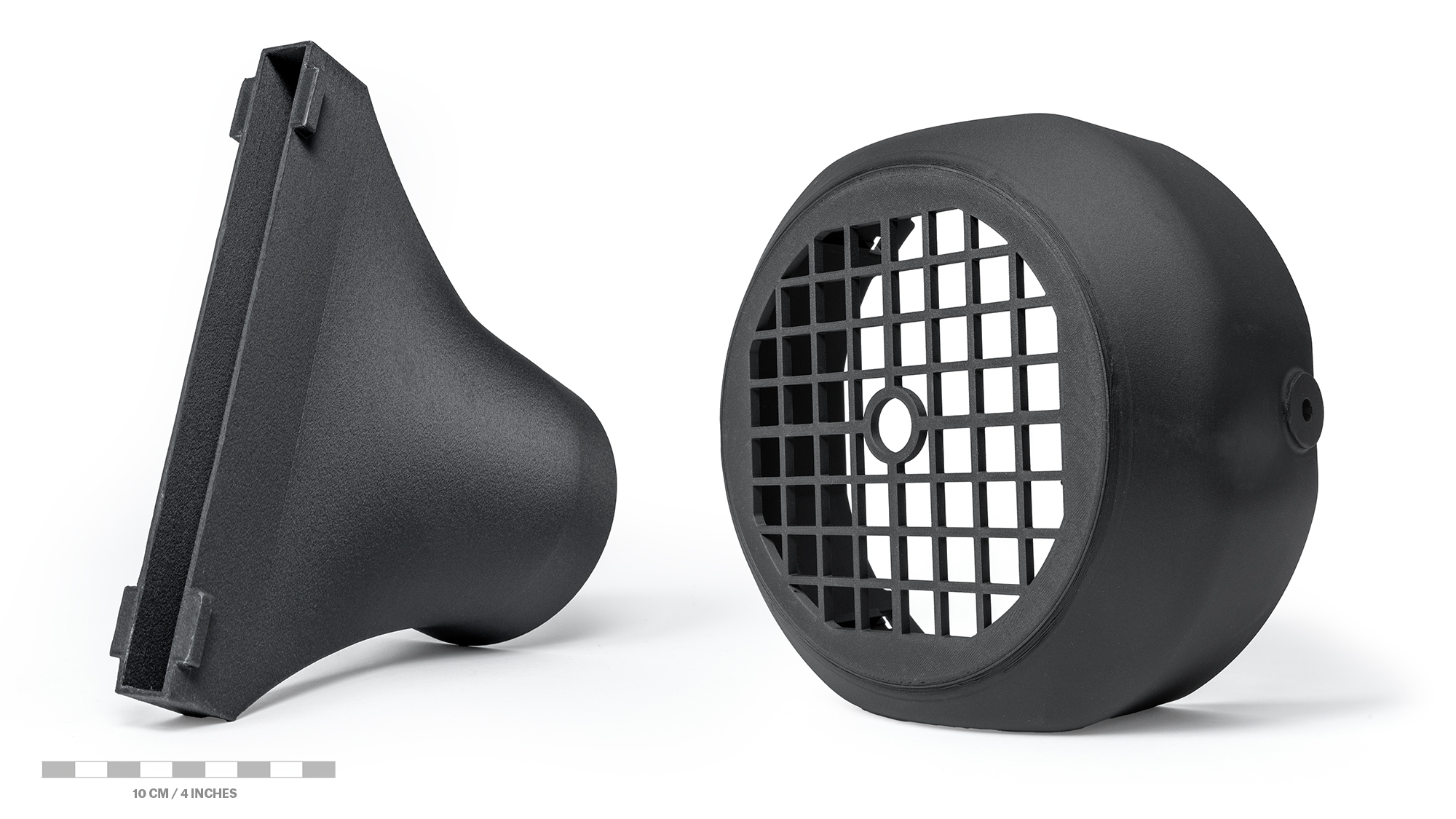 PCCF (left) and PA11 Carbon Fiber (right)
For maximum safety
We fully understand the industry's security requirements – a printer with a proper offline mode is generally more valued than an always-online device with a fancy mobile app. The HT90 can operate in three modes: a fully functional offline mode without disadvantages or compromises. Slice an object, place it on a USB drive, plug it into the HT90, and start printing. No logins, no registrations, no apps. You can even update the firmware offline using a file on a USB drive.
For added convenience, you can integrate your printer into your network and use the built-in print management software via your web browser. This interface is only accessible via the local network and offers additional options for improved print scheduling, remote management, and monitoring with the built-in webcam. You can even add an additional USB webcam to set up a view from a different angle.

Finally, you can enable full online functionality, allowing you to connect the printer to Prusa Connect, our secure remote print management platform with SSL encryption. Prusa Research never collects data without consent—not print data, not printer environment information. We believe no company should be interested in this information, whether you're simply testing the printer's capabilities or designing the next-generation space shuttle. You can share the log data with our technical support if you wish.
Easy setup, automatic calibration, no manufacturer lock-in
Everything we learned from our Original Prusa printers has been incorporated into the HT90. Calibration is automatic, you don't need any special software or tools, and you can start printing minutes after unpacking – all controlled via easy-to-navigate menus on a large 7" touchscreen (and there's the option to use the more robust network system). This makes onboarding new users simple and convenient.
Thanks to the load cell sensors, you can also... always a perfect first shift To save weight, we've moved the sensors from the print head to the heated bed. The result, however, is the same – a flawless first layer, regardless of the print surface or material you use. We offer our proven flexible print sheets, which make print removal easy (textured PEI and PA versions are available).
Print preparation (slicing) for the HT90 is done, as with all our other printers, using PrusaSlicer, an open-source tool that we have been actively developing in-house for years. It includes factory-tested print profiles for dozens of materials and optimized print settings.
Naturally You can use any filament brand you want. – there is no manufacturer tie-in.
Accessories for high-performance materials
Almost all advanced materials are highly hygroscopic, meaning they quickly absorb moisture from the air, which impairs their performance or even makes them unprintable. With this in mind, we offer two optional accessories for the HT90.
The first is a Industrial oven manufactured by Memmert. The filament dryer UF30 is the perfect solution for the precise drying of filaments, with temperatures adjustable between +20 and +300 °C.
Once your filaments have reached the optimal moisture level, you should place them in the DryBox Place them where they will be stored safely and dry for the duration of the printing process.

Introduction of Prusament PEI
The launch of the HT90 is also the perfect opportunity to introduce our new Prusament PEI 1010 (Ultem). This is a high-performance material with outstanding temperature and chemical resistance, exhibiting excellent mechanical strength. This makes it an ideal filament for demanding industries such as aerospace, automotive, and more.
We are currently finalizing the last preparations and you can already use Prusament PEI in our shop Discover it. It will be available in the near future, and you can set up a watchdog to receive a notification as soon as it's in stock.

The most affordable printer for high-end filaments
If you are interested in the Prusa Pro HT90, you can a special page Visit our website where you can submit your inquiries and price requests. Our team is ready to answer all your questions. We also have the product page for the Prusa Pro HT90. in our e-shop recorded, where we can give you a good overview of all functions in one place.
I'm truly excited about the HT90 and the innovations we've been able to implement. As I mentioned before, there's a mutual influence between the Pro and Original Prusa lines, and developing industrial printers allows us to explore new solutions and technologies. We want to bring the same kind of democratization of 3D printing to the industrial sector that we've done with our desktop printers.