 BambuLab
Bambu Lab X1 Carbon Combo – Highspeed CoreXY-3D-Drucker mit AMS & LIDAR
Bambu Lab X1 Carbon Combo – Highspeed CoreXY-3D-Drucker mit AMS & LIDAR
Couldn't load pickup availability
Manufacturer contact - EU product safety information
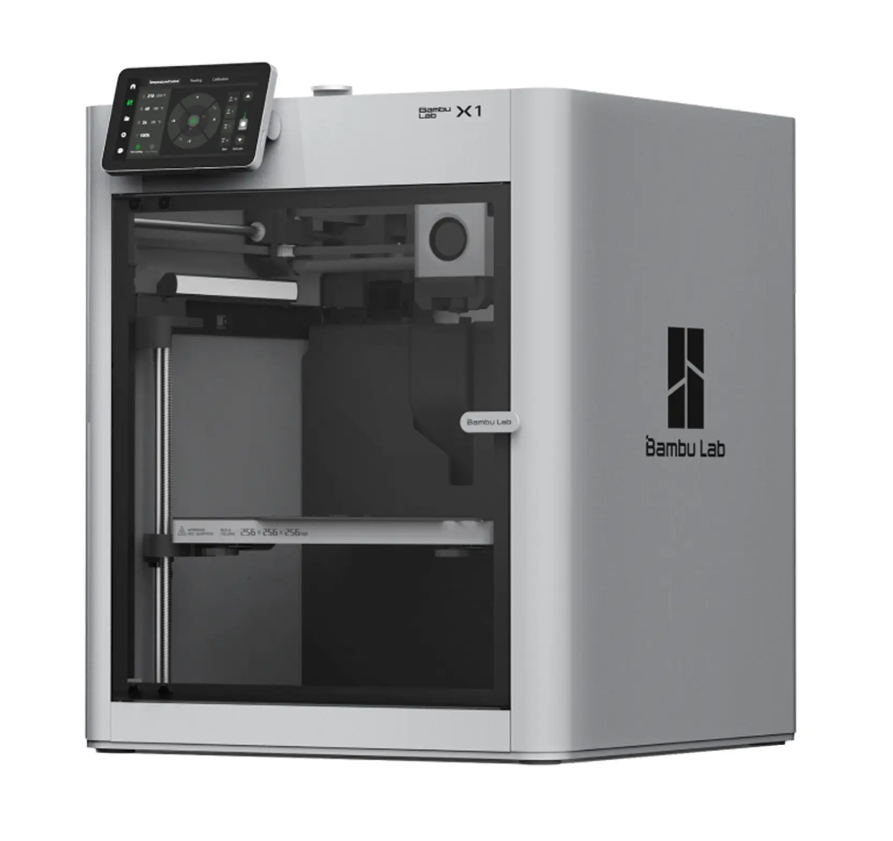
The X1 Carbon is a high-speed FDM 3D printer from Bambu Lab was developed by a company that specializes in the development and manufacture innovative and environmentally friendly 3D printing solutions has specialized in technologies based on extensive knowledge and experience in robotics, artificial intelligence, materials science, and the internet. The X1 Carbon 3D printer is in the basic version (printer only) or in a combination package with the AMS module for multi-material and multicolor printing available . The features of both versions are described in detail below.
Video 1: The X1 Carbon 3D printer. Source: Bambu Lab.
The X1 Carbon 3D printer is characterized by a build volume of 256 × 256 × 256 mm , a high printing speed of up to 500 mm/s , a high extrusion and bed temperature of 300 °C or 110/120 °C , double automatic bed leveling, high print quality with a lidar resolution of 7 μm as well as the possibility of 3D printing in multi-color and multi-material mode thanks to a high degree of upgradeability and adaptability What makes the printer so user-friendly is the fact that it is delivered assembled, calibrated and tested, so that the user can start printing within minutes of receiving the X1 Carbon printer.
Technical features
The X1 Carbon 3D printer is designed to not only It offers not only excellent printing speed , but also outstanding accuracy and surface finish of the parts. The housing is made of welded steel with an aluminum and glass shell. The Core XY motion system has an acceleration of 20,000 mm/s², a flow rate of 32 mm³ /s, and a printing speed of 500 mm/s . To compensate for any vibrations at high printing speeds, Bambu Lab has opted for an active vibration compensation technology The decision was made to use the XY axes, with the X-rail made of ultralight full carbon (184 g).
Video 2: The technology of active vibration compensation. Source: Bambu Lab.
The X1 Carbon 3D printer features AI-driven electronics . Advanced motion control is provided by a dual-core 32-bit MCU, and the AI functions are handled by a quad-core SoC with two TOPs NPUs. One of the AI functions is The Bambu Micro Lidar brings micrometer-level precision to 3D printing. The system scans the nozzle height, calibrates the flow, and scans the first layer to ensure no errors have occurred.
Video 3: The Bambu Lab micro-lidar is installed on the printhead. Source: Bambu Lab.
Regarding compatible 3D printing materials, the X1 Carbon printer offers much more than just PLA and PETG, which are easy to print at low temperatures. With the X1 Carbon, it is possible to... to work with more demanding materials , thanks to the sophisticated thermal control the printer offers. The X1 Carbon is equipped with a lightweight tool head (574 g) with an all-metal hotend and a 0.4 mm nozzle made of hardened steel with 50 HRC (0.2, 0.6 and 0.8 mm diameters are also compatible) as well as with Drive gears made of hardened steel equipped. This extrusion system allows for a wider selection of materials, including PLA, PETG, TPU, ABS, ASA, PVA and PET. X1 Carbon is particularly suitable for PA. and PC and is based on carbon fiber and glass fiber reinforced polymers specialized.
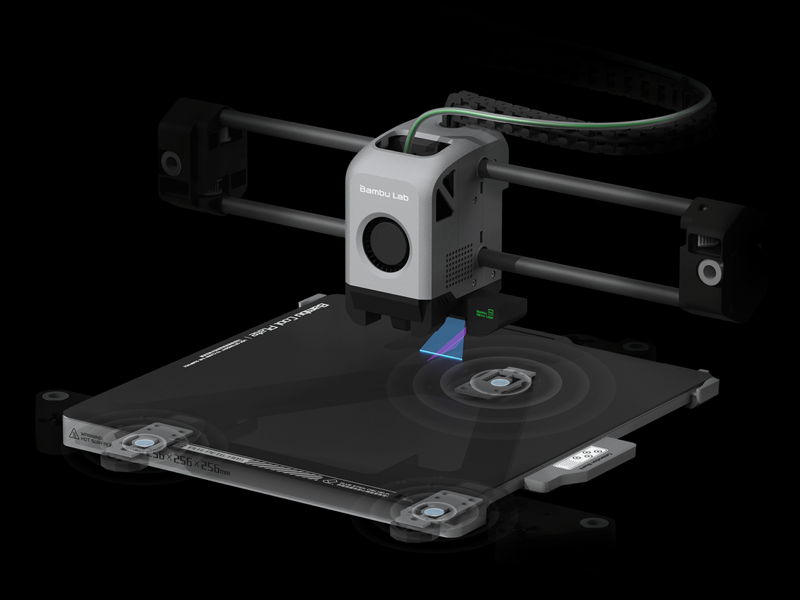
Image 1: The printing surface of the X1 Carbon printer. Source: Bambu Lab.
The printing surface of the X1 Carbon printer consists of a flexible steel plate (Bambu Cool Plate, Bambu Engineering Plate included). Bed leveling does not end with measuring the nozzle height relative to the bed. The previously mentioned Micro-Lidar and a Force sensor work together to achieve additional redundancy in bed leveling, and a algorithm links everything together to optimal dual automatic bed leveling to ensure this. This system ensures that no errors go unnoticed.
The high-performance cooling system The X1 Carbon, consisting of a fan for part cooling, a fan for the heating plate, a fan for the control board, a fan for chamber temperature control, and an additional fan for part cooling, ensures optimal part quality. To create ideal conditions for demanding materials, The chamber temperature sensor automatically adjusts the speed of the chamber fan . Furthermore, an advanced fan system with feedback is available. Detect when a fan is not responding or is blowing at the wrong speed .
Safe 3D printing
One of the safety measures used in the X1 Carbon printer is the AI-supported inspection system for the first shift with Bambu Micro Lidar technology. Detects printing errors such as the "Spaghetti Monster" does the printer automatically interrupt? The printing process is interrupted and the user is warned. Another safety feature of the X1 Carbon printer is... The automatic restart of the printing process after a power outage . This solution ensures that no material is wasted and that printing can continue from where it was interrupted.


Image 2: Thanks to AI-supported functions, printing errors can be detected. Source: Bambu Lab.
Some Other security solutions used in the X1 Carbon printer include:
- A 1920 x 1080 Chamber surveillance camera for remote live streaming, time-lapse videos of the printing process, and troubleshooting.
- An intelligent Door sensor - The pressure is automatically interrupted when the chamber door is opened.
- A Sensor for filament runout notifies the user when the filament runs out, allowing the material to be reloaded and printing to continue seamlessly.
- A RFID sensor It detects which filament is being used and applies the best printing settings (only works with Bambu Lab filaments).
- Optional Filament odometry as part of the AMS module. This function lets the user know how much filament is being used and how much is left.
- A BTM sensor It detects when the belt tension decreases and alerts the user to activate the semi-automatic belt tensioner.
Overall, the X1 Carbon 3D printer is equipped with 43 sensors for the printer's health management equipped. The sensors work together and monitor. The printer's status and performance are displayed in real time . They provide the user with detailed information about the printer and enable advanced control of the device for optimal results.
X1 Carbon AMS Combo
The X1 Carbon 3D printer can be purchased in a combination package with the AMS module. A device that attaches to the top of the printer can be purchased to unlock the multicolor and multi-material printing function. The parallel 4x4 design fits spools with a width of 50-68 mm and a diameter of 197-202 mm. It should be noted that TPU or moist PVA should not be used with the AMS module , and it is also recommended that Avoid using cardboard spools , as they can slip.

Image 3: The AMS module enables multi-material 3D printing. Source: Bambu Lab.
The AMS module works with a two-stage feeding system with a filament selection module and a filament buffer module . The filament selection module has four inlets for connection to four separate AMS units (with an optional Bambu Lab AMS Hub, ideal for 3D printing farms ). Each slot has a Hall sensor The module includes filament detection sensors and sensors for filament exit and winding. The buffer module's function is to ensure that the filament tension remains within a specific range. The AMS module has a total of... Over 10 sensors in the filament path carefully monitor and control the position, speed and tension of the filament on its way to the extruder.
Video 4: The X1 Carbon combination package with the AMS module. Source: Bambu Lab.
The AMS module contains silicone rubber O-rings that seal the device Seal airtight to prevent the filament from absorbing moisture . The moisture-proof system also includes a humidity sensor and two packs of desiccant for moisture absorption. If the humidity inside the AMS module exceeds the preset value, the humidity sensor detects this and reminds the user to replace the desiccant bags.
user interface
The X1 Carbon printer offers Connectivity via WiFi, Bambu-Bus, or a micro SD card. The user interface is displayed on a 5-inch 720p LCD touchscreen The printer is displayed and can also be controlled via a mobile or web application. The native laminating software for the X1 Carbon printer is Bambu Studio. with native 3MF support.
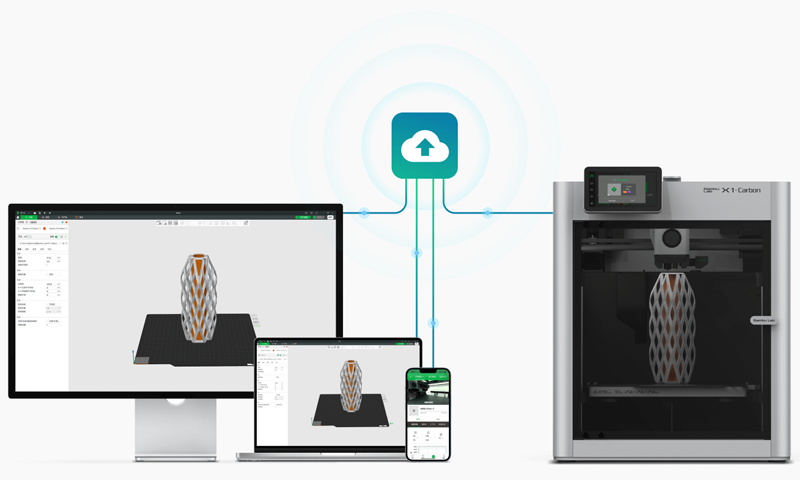
Image 4: Printing from anywhere with the X1 Carbon. Source: Bambu Lab.
Nevertheless, there are also Third-party lamination programs that export standard G-code, such as Superslicer, Prusa Slicer and Cura, are compatible (certain advanced features may not be supported).
Environmentally friendly and versatile
One of the most exciting features of the X1 Carbon printer is its Environmentally friendly design that aligns with Bambu Lab's mission to develop sustainable 3D printing solutions. One X1 Carbon 3D printer can easily do the work of several 3D printers and has the same productivity. This means Less waiting time and faster iteration – ideal features for 3D printing farms, research facilities, etc. All the intelligent functions, the efficient extrusion system, the advanced print base, the powerful cooling system, and the numerous AI-powered features have enabled the X1 Carbon 3D printer to... to reduce the CO2 footprint by 80% and save about 20% on plastic .
This 3D printer is the ideal device for anyone who High surface quality and excellent mechanical properties in a smooth and fast 3D printing process You might want to achieve this, perhaps in a setup with multiple 3D printers for serial production. This functionality is made even easier by the X1 Carbon's intelligent connectivity options and user-friendly interface and lamination software.