


 BambuLab
Bambu Lab H2C – Compact CoreXY 3D printer for workshops & education
Bambu Lab H2C – Compact CoreXY 3D printer for workshops & education
Couldn't load pickup availability
Manufacturer contact - EU product safety information
The H2C is a large-format 3D printer designed for multi-material and multi-color production with minimal material waste during filament changes. Based on the H2 series, it integrates the new "Vortek" hotend changing system. Its architecture features an automated changing system that minimizes waste during filament changes and eliminates the need for conventional cleaning towers.
Video 1: The Vortek system. Source: Bambu Lab
The build volume varies depending on the mode: 305 × 320 × 325 mm in single-extruder mode (right side); 300 × 320 × 325 mm in dual-extruder mode (both sides active); and with only the left extruder activated, the volume is 325 × 320 × 325 mm. This slight reduction compared to other models in the same series results from the space required for the hotend changing mechanism. Nevertheless, the machine retains its rigid frame construction made of aluminum and steel profiles; the side and top housings are made of reinforced polymers, and the windows are made of tempered glass. All of this is housed in a compact unit—approximately 492 mm wide, 514 mm deep, and 626 mm high—with an empty weight of around 32.5 kg.
The extruder uses a permanent magnet synchronous motor (PMSM), a technology with significant advantages over conventional stepper motors. The maximum extrusion force reaches 10 kg, representing an increase of 67–70% compared to conventional systems. This enables high material throughput with consistent flow stability—particularly important for high-speed printing or highly viscous materials.
Video 2: The extrusion system. Source: Bambu Lab
The system detects the position and resistance of the filament at a frequency of 20 kHz. This high sampling rate enables real-time detection of events such as filament slippage, partial hotend blockage, or filament breakage. In combination with eddy current sensors in the print head, a closed-loop control of the extrusion pressure is achieved, allowing the pressure advance parameter to be adjusted dynamically and without manual intervention.
Video 3: The vision encoder in operation. Source: Bambu Lab
Under controlled conditions, the linear positioning accuracy of the X and Y axes is less than 50 micrometers—comparable to the thickness of a human hair. This level of precision can be achieved directly through the optional installation of a vision encoder.
Hotend architecture and Vortek system
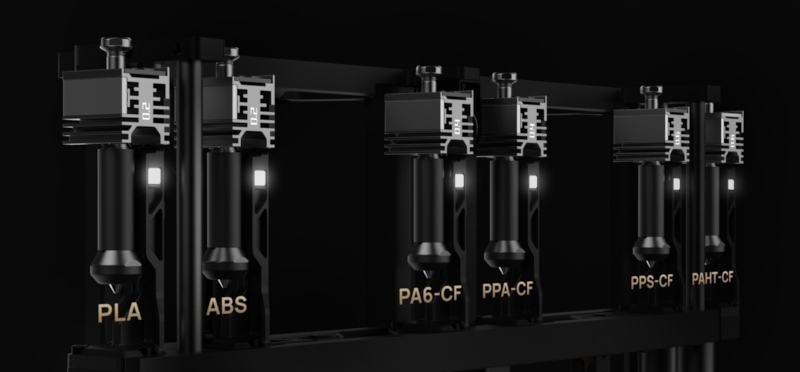
Image 1: The hotends of the Vortek system. Source: Bambu Lab
The Vortek system forms the technological heart of the H2C. It is a contactless, automatic hotend exchange mechanism based on three principles: magnetic attachment, inductive heating, and wireless data communication. The right-hand carrier holds up to six interchangeable hotends. Each unit has an integrated electronic chip that stores data on its thermal history, cycle count, and overall condition. During the exchange, the printhead positions itself over the selected hotend; this couples magnetically, and simultaneously, inductive heating begins.
Video 4: The system in action. Source: Bambu Lab
The average heat-up time to typical printing temperatures (e.g., 215 °C for standard PLA) is approximately 8 seconds. This high speed is achieved through high-frequency induction coils in the main print head, eliminating the need for thermal leads or electrical connectors on the hot end—thus reducing potential sources of error. No purge is generated during hot end changes, as each hot end remains thermally insulated and cold until activated. However, an initial purge is required when loading filament into a new or completely cooled hot end for the first time to remove air and ensure a continuous melt.
Multi-material capability and filament management
The printer supports up to seven simultaneously active hotends: six in the Vortek system (right side) and one fixed hotend on the left. Each hotend can be assigned a different material—rigid, flexible, water-soluble, carbon fiber reinforced, etc.—enabling the production of functionally integrated parts without reassembly. To supply these hotends, the H2C is compatible with up to three automatic material feeders (AMS). Two standard AMS units can serve the six hotends on the right side, while a high-temperature (HT) AMS feeds the fixed hotend on the left. This configuration provides up to 24 spools of material simultaneously—ideal for long, unattended print jobs.

Figure 2: The multi-material system allows for up to 24 materials. Source: Bambu Lab.
Material compatibility is extensive: from standard thermoplastics (PLA, PETG, TPU) to engineering polymers such as polycarbonate, glass fiber reinforced nylon (PA-GF), high-temperature resistant polyamide (PAHT-CF), or polyphenylene sulfide (PPS-GF20). The closed pressure chamber and the hotend temperature (up to 350 °C) are crucial for adhesion between the layers and for minimizing residual stresses in these materials.
Thermal system and environmental control
The printer has a Heated pressure chamber with heating elements integrated into the side and top walls. It reaches temperatures of up to 65 °C to significantly reduce warpage in semi-crystalline materials such as PA12 or POM. Hotends They operate at temperatures up to 350 °C and use hardened steel nozzles as standard, with diameters of 0.2 mm, 0.4 mm, 0.6 mm and 0.8 mm; nozzles for abrasive materials are optional. Hard metal (tungsten carbide) nozzles available. In addition, all internal components are made of UL94 V-0 flame-retardant materials manufactured in a way that ensures high safety even in the event of accidental ignition.
Air filtration and emission control
Printing with technical materials produces ultrafine particles and volatile organic compounds (VOCs), which are controlled by a three-stage filter system: a Coarse filter G3 , a HEPA H12 filter (at least 99.5% separation efficiency for particles ≥ 0.3 µm) as well as a activated carbon filter For the adsorption of VOCs such as styrene, caprolactam, or formaldehyde. The airflow runs from bottom to top, creating a one-sided airflow and thus preventing the accumulation of pollutants in the pressure chamber.
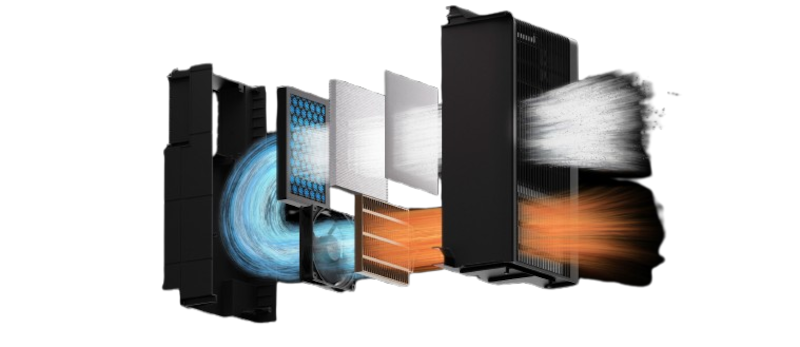
Figure 3: The multi-stage filter system. Source: Bambu Lab.
Sensors and monitoring systems
The machine features an extensive network of temperature, optical, pressure, position, and current sensors—over 59 elements in extended configurations with a laser module, six Vortek hotends, and a top camera. The camera system includes a Printhead camera with macro lens and real-time analysis for detecting irregularities such as blobs or underextrusion, a Top camera for structural component monitoring and a Front camera for remote monitoring. All data is processed by a proprietary neural algorithm that not only detects errors but also assesses their severity and suggests corrective measures — such as stopping, adjusting parameters, or partially reprinting.
Optional modules and expandability
The platform is designed for third-party modules or future manufacturer extensions:
- Cutting module: Pneumatically driven rotary blade, suitable for cutting flexible materials or for automatically removing components from the print bed.
- Laser module: Available in 10W and 40W versions; enables engraving, flat cutting, and marking on organic materials (wood, leather, paper) as well as some plastics. Requires active cooling and is subject to strict safety regulations.
- Enhanced connectivity: In developer mode — provided the laser or cutting module is deactivated for safety reasons — an MQTT interface is enabled for integration into industrial automation systems (MES, SCADA) or fleet management software.
Technical limitations and usage instructions
Despite its flexibility, the H2C has some limitations due to the current firmware design:
- Hotends with different nozzle sizes cannot be combined within a single print job. However, hotends with the same nozzle size but different feed profiles (standard vs. high throughput) are permitted.
- Due to the modified print surface, the build plate is not interchangeable with other models in the same series. However, accessories such as vision calibration plates, cutting mats, and laser platforms remain compatible across the entire product line.
General information |
|
| Manufacturer | Bambu Lab |
| technology | FDM/FFF |
Printer properties |
|
| Filament diameter | 1.75 mm |
| Pressure volume | 330 × 320 × 325 mm |
| Number of extruders | 2 |
| Nozzle diameter | 0.2mm, 0.6mm, 0.6mm, 0.8mm |
| Type of display | Touch |
| Filament end sensor | ✓ |
| Print surface | Flexible magnetic |
| Self-leveling | ✓ |
| Air filter | ✓ |
| Extrusion system | Direct |
| Screen size | 5" |
| Compatible with materials from other manufacturers | ✓ |
| Webcam | Yes |
Software and connectivity |
|
| Connectivity | USB / Ethernet / WiFi |
| WiFi connectivity | ✓ |
| LAN/Ethernet connectivity | Yes |
Printing properties |
|
| Resolution of the XY positioning | 0.3 µm |
| Maximum extrusion temperature | 350 °C |
| Maximum base temperature | 151 °C |
| Maximum chamber temperature | 65°C |
| Maximum printing speed | 600 mm/s |
Dimensions and weight |
|
| Dimensions | 492 x 514 x 626 mm |
| Weight | 32.5 kg |
Other |
|
| HS Code | 8477.5900 |
Other information |
|
|
Package contents H2C AMS Combo Standard :
H2C AMS Combo Standard + Ultimate Set :
H2C Laser 10W :
H2C Laser 10W + Ultimate Set :
H2C Laser 40W :
H2C Laser 40W + Ultimate Set :
|


